Peptide guide
DSIP.
Sleep, tested.
Named for what it did to rabbits in 1977. Tested in people a handful of times in the 1980s. Then almost nothing.
The short answer
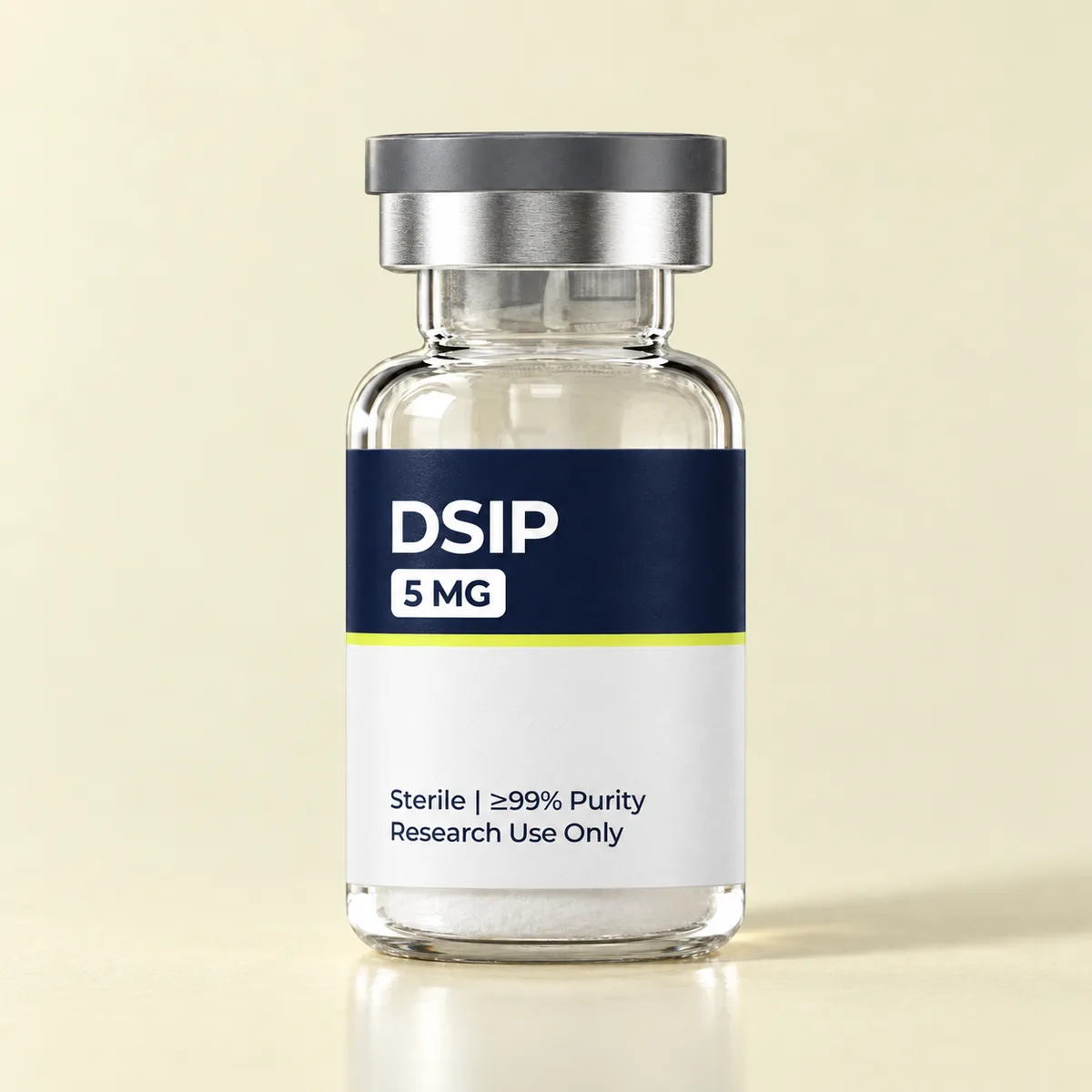
DSIP stands for delta sleep-inducing peptide, a name it earned in 1977 when researchers isolated it from rabbits and reported that it increased delta wave sleep. The name has done most of the marketing ever since. A small number of human studies followed in the 1980s and their results were mixed, with modest changes in some patients and nothing in others. The mechanism is still unclear, it is not approved anywhere in the world, and the research trail effectively goes cold decades ago. Modern interest is community-driven rather than clinical, and that distinction is the whole point of this page.
What the research shows
- The original finding — the peptide was identified in rabbits in 1977 and named for an apparent increase in delta wave sleep. Animal naming conventions are not human results, and the label has outlived the evidence behind it.
- The human studies — a handful of small investigations in the 1980s looked at sleep in poor sleepers and in other patient groups. Reported effects were modest where they appeared at all, and they did not point in a single direction.
- Mechanism unknown — there is no agreed receptor or pathway. Proposals have ranged from hormone regulation to stress response modulation, and none has been confirmed. A compound without a mechanism is hard to dose rationally.
- No modern replication — the obvious follow-up work, a properly powered sleep laboratory trial with polysomnography, was never done. Forty years of silence is itself informative about how promising the early results looked to the field.
- Where today's reputation comes from — forums, vendor copy and personal logs. That is anecdote, and anecdote is especially unreliable for sleep, which responds strongly to expectation and to the act of taking something at bedtime.
Dosing in practice
A physician decides whether anything belongs in your sleep plan and at what dose. What follows is what circulates in the old literature and in user protocols, written so you can read a label rather than as a recommendation.
Reported use is subcutaneous, in the low milligram range, taken shortly before bed and often only on some nights rather than daily. Vials arrive as a freeze-dried powder that must be reconstituted with bacteriostatic water, and the mistake that causes real harm is confusing milligrams with milliliters while drawing up insulin syringe units. Because no dose has been validated in a modern trial, every number in circulation is a convention, not a finding.
Side effects and risks
- No modern safety dataset — the old studies did not describe serious problems, but they were small, short and not designed to detect uncommon harms.
- Reported informally by users — injection site irritation, headache, grogginess the next morning and occasional vivid dreams. None of this comes from controlled monitoring.
- Unknown long-term profile — nobody has followed people using it for years, so late effects are unmeasured rather than excluded.
- Product risk — independent testing of gray-market peptide vials has repeatedly found wrong doses and impurities. With an unapproved compound that is the concrete hazard.
- The missed diagnosis — chasing sleep with an untested peptide is a good way to leave sleep apnea, thyroid disease, depression or a medication side effect undiagnosed for another year.
Legal and FDA status
DSIP is not an approved drug in the United States or in any other country, and it has no recognized medical indication. Vials sold online carry a research use only label, which is a legal disclaimer for the seller rather than a quality standard for the buyer. It is not a dietary ingredient either, so anything marketed as a supplement containing it is outside the rules. There is no lawful consumer product to point to here.
How people get it legally
Honestly, the lawful supply route for DSIP is narrow to the point of being theoretical. No approved product exists and no compounding pathway has been established for it. What remains legitimate is the first step, which is also the useful one: a licensed physician who takes a real sleep history, screens for apnea and the other common causes, and treats what is actually wrong. Cognitive behavioral therapy for insomnia has the strongest evidence base in this whole field, and it is not a vial.
Questions people ask
What does DSIP do?
Does DSIP actually help you sleep?
Is DSIP safe?
Is DSIP legal to buy in the US?
How does DSIP compare with melatonin?
Sources: PubMed — DSIP literature · PubMed — DSIP human sleep studies · PubMed — DSIP mechanism · PubMed — insomnia treatment evidence