Peptide guide
MOTS-c.
Energy peptide.
The mouse data is genuinely interesting, the human data is thin, and the gap between the two is where the marketing lives.
The short answer
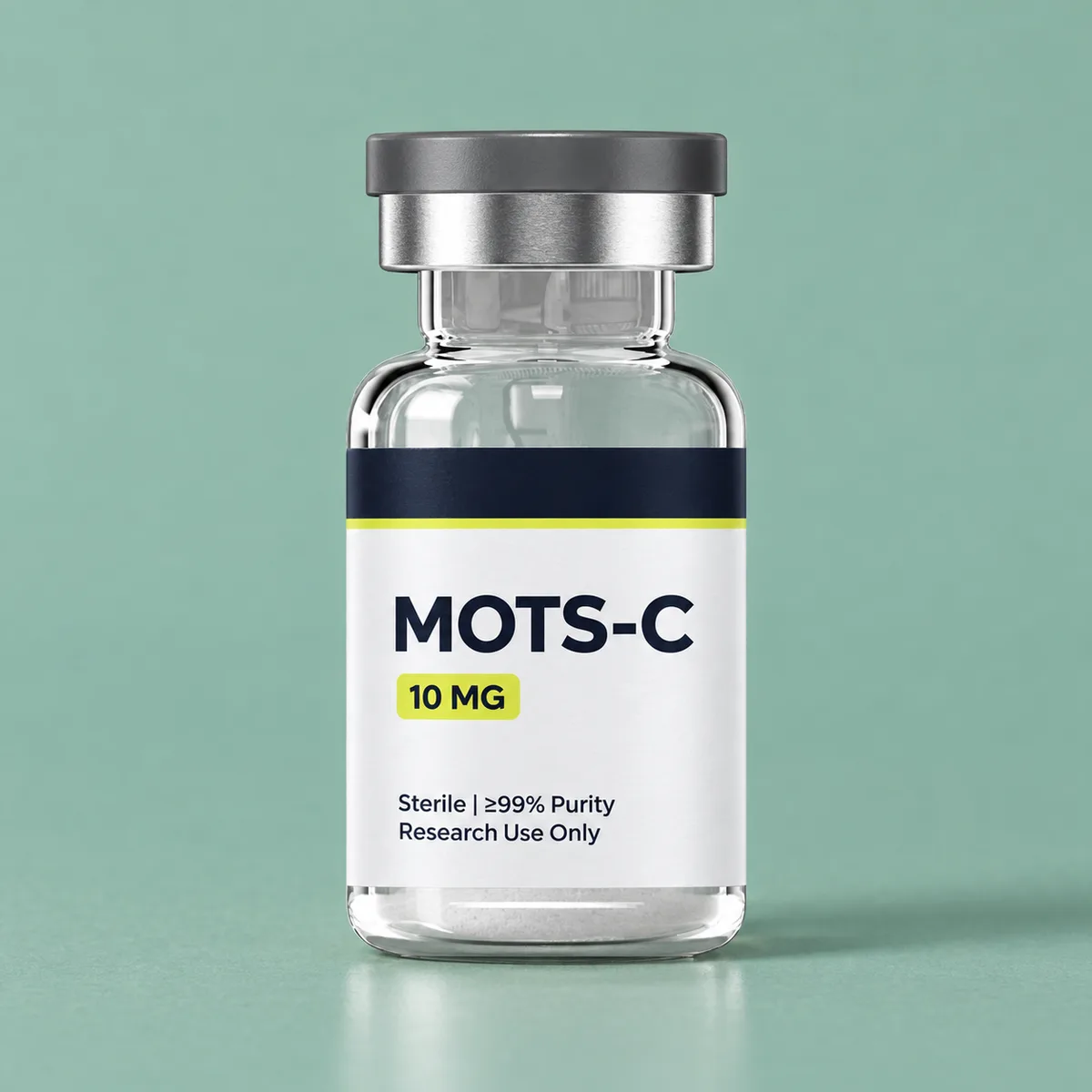
MOTS-c is a short peptide encoded inside mitochondrial DNA, and in animal studies it behaves like an exercise mimetic, improving insulin sensitivity and physical capacity. In humans, almost everything published is observational or comes from small early studies, so nobody can yet tell you what an injected course does to body composition or metabolic health. It is a promising research molecule being sold as a finished product.
What the research shows
- Animal work carries the case. In mice, MOTS-c improved insulin sensitivity, limited weight gain on a high-fat diet, and improved running capacity in young, middle-aged and old animals. These are the findings every vendor quotes, and they are real — in mice.
- The mechanism is metabolic. MOTS-c acts on the folate and methionine cycle and activates AMPK, the cell's low-energy sensor. It also moves into the nucleus under metabolic stress and influences stress-response genes, which is why it is described as a signal between mitochondria and the rest of the cell.
- Human data is mostly measurement, not treatment. Circulating MOTS-c rises with exercise in people, and lower levels have been associated with insulin resistance in observational cohorts. Association is not the same as showing that injecting it helps.
- Genetic hints exist. A variant in the mitochondrial region that encodes MOTS-c has been linked with longevity in East Asian cohorts. Interesting, but a long way from a clinical outcome.
- Interventional human trials are scarce. Published human dosing studies are small and early, and there is no randomized trial establishing fat loss, endurance gains or metabolic benefit from injected MOTS-c.
Dosing in practice
There is no approved dose, because there is no approved product. A physician decides whether any of this is appropriate. What follows is what appears in research protocols and clinic practice.
- Reported subcutaneous doses commonly fall between 5 and 10 mg
- Frequency varies widely, from two or three times weekly to short daily courses
- Most protocols run a few weeks and then stop, rather than continuing indefinitely
- Powder must be reconstituted, and the mg to mcg conversion is where people go wrong
Side effects and risks
- No controlled safety record. Without human trials of any size, the honest position is that the side effect profile is unknown rather than benign.
- Anecdotal reports — injection site irritation, flushing, headache, fatigue on dosing days, occasional nausea
- Unknown long term — a peptide that shifts AMPK signaling and cellular stress response has no published long-term human follow-up
- The vial is the bigger risk. Products sold for research use only are not tested for purity, sterility or actual content, and an injected impurity is a serious problem
- Not for everyone — pregnancy, breastfeeding, active cancer and tested athletic competition all rule it out
Legal and FDA status
MOTS-c is not an approved drug in the United States and is not a dietary supplement, so it cannot legally be marketed or sold for human consumption. What exists is a research chemical market that relies on a research use only label to stay at arm's length from the FDA. It also sits outside the usual compounding route, so a licensed pharmacy is generally not an option the way it is for sermorelin. Anyone buying MOTS-c today is buying an unregulated product.
How people get it legally
For most people, the legal answer is that they do not — not as a finished consumer product. The defensible route is a consultation with a clinician who can look at what you are actually chasing, whether that is insulin resistance, stubborn fat or flagging energy, and who can offer something with evidence behind it. If a research peptide still makes sense in your case, that conversation is also where monitoring and sourcing get handled properly.
Questions people ask
What is MOTS-c good for?
Can MOTS-c help with belly fat?
What are the side effects of MOTS-c?
What time of day should I take MOTS-c?
What happens when you stop taking MOTS-c?
Sources: PubMed — MOTS-c literature · PubMed — metabolic studies · ClinicalTrials.gov — registered studies · FDA — compounding safety risks