Peptide guide
Melanotan.
Read first.
An unlicensed tanning injection with regulator warnings behind it. This page exists to talk you out of it.
The short answer
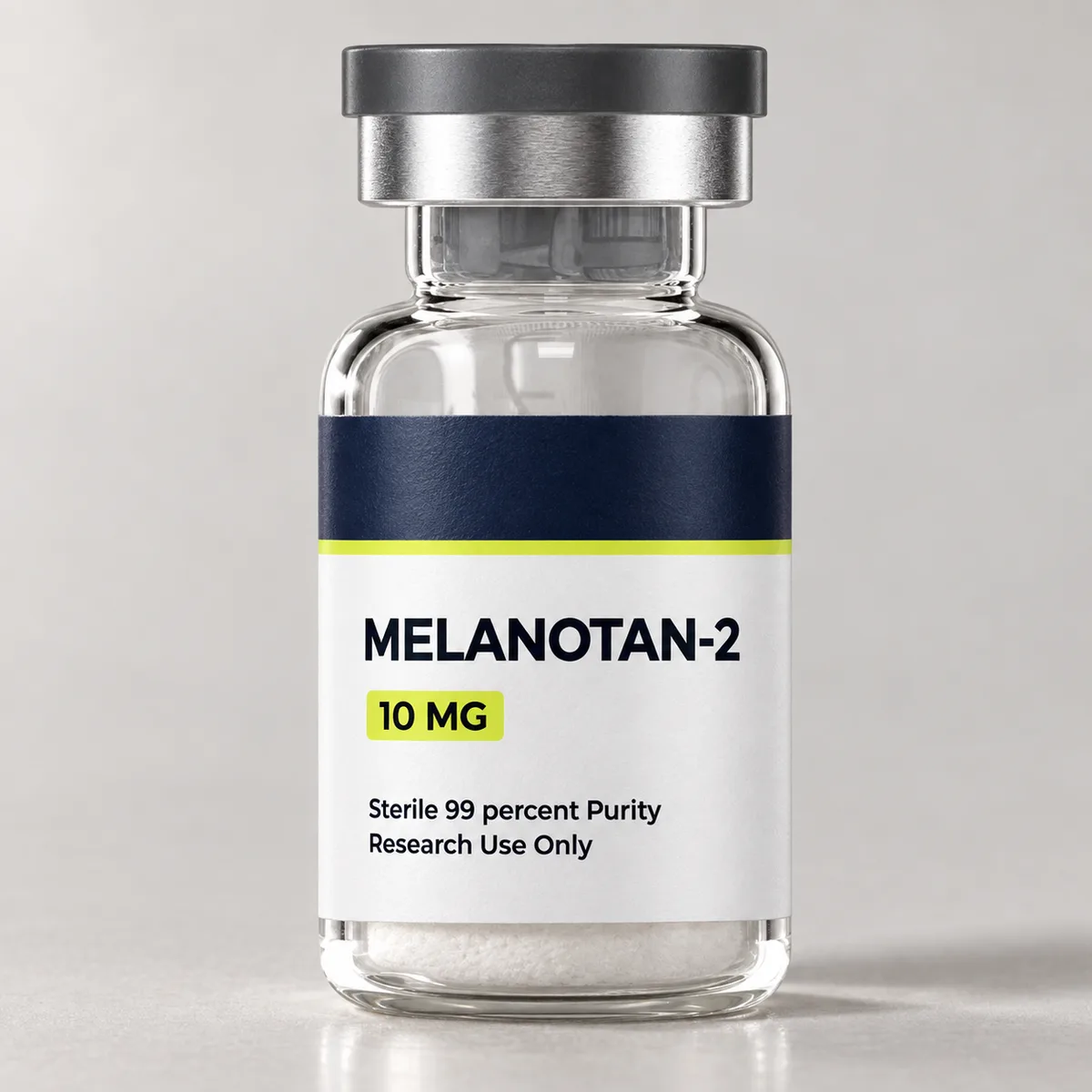
Melanotan II is a synthetic molecule that switches on the same receptors your body uses to make pigment, which is why an injection can darken skin. It has never been licensed anywhere as a tanning product, and it is sold in gyms, on social media and through offshore websites as a vial or a nasal spray. The published record on it is case reports rather than trials, and those case reports describe effects most buyers have not been told about, including changes to moles that dermatologists say can look like melanoma. Medicines regulators in several countries have warned against it by name. This page is not a review of a product, it is a warning label the seller did not print.
What is actually known
- How it works — it mimics the hormone that tells pigment cells to produce melanin, so tanning happens through a signal rather than through sun damage. That mechanism is real, and it is the reason the product sells.
- What it is not — it is not selective. The melanocortin receptor family also governs appetite, sexual arousal and inflammation, which is why users report effects that have nothing to do with skin color.
- The evidence base — there is no randomized trial establishing safety or effectiveness for cosmetic tanning. What exists in the literature is case reports: individual patients described by the clinicians who treated them, usually because something went wrong.
- What the case reports contain — nausea and vomiting, facial flushing, spontaneous erections in men, appetite loss, darkening of existing moles, new moles appearing, and in a small number of published cases more serious events after injection.
- Product quality — supply is entirely unregulated. Analyses of unlicensed tanning products have found preparations that did not match their labels, and an injected product made outside any standard carries infection risk on top of everything else.
Moles and melanoma
This is the part that deserves your full attention. Published case reports and dermatology commentary describe moles that darkened, grew or changed shape in people using melanotan, and new pigmented lesions appearing during use. Individual case reports of melanoma diagnosed in users also exist. None of that proves the peptide causes skin cancer, and it is important to say so plainly, because the honest evidence here is thin and one-directional.
The reason it matters anyway is diagnostic. Early melanoma is caught by noticing that a mole changed. A compound whose documented effect is making moles darker, larger and more numerous attacks that signal directly, and it does so in exactly the group most likely to be using it, people who want more sun exposure. Dermatology societies have raised this concern for years. If you have used it, a skin check with a dermatologist and a record of what your moles look like now is the single most useful thing you can do.
Why no dose is listed
Every other compound page on this site describes reported dosing so that a reader can understand a label. This page does not, and the omission is deliberate. Printing numbers for an unlicensed cosmetic injection implies there is a correct amount to use, and there is not. No regulator has assessed a dose, no trial has established one, and the schedules circulating online are copied between users with no measurement behind them.
There is also nothing to weigh against the risk. When a medicine treats a disease, dosing is a trade between benefit and harm, and that trade is worth describing carefully. A darker skin tone is not a medical benefit, so the calculation has only one side to it. If you want the reconstitution math for a peptide your physician has actually prescribed, the dose calculator is here for that.
Side effects and risks
- Nausea, vomiting and loss of appetite, reported commonly enough that users treat them as expected rather than as warnings.
- Facial flushing and a spike in blood pressure or heart rate in the period after an injection.
- Spontaneous and prolonged erections in men, a direct consequence of the receptor family involved and not a rare curiosity.
- New moles, darkening moles and freckling, described in published cases and discussed in dermatology literature.
- Serious individual events have been published, including muscle breakdown and hospital admission after use, which is the kind of outcome a case report exists to record.
- Infection and contamination risk from injecting an unlicensed product prepared outside any manufacturing standard, including the risks carried by shared or reused needles.
- Nasal sprays are not safer. The same molecule with an unmeasured delivered dose is less controlled, not more.
Legal and regulator status
Melanotan II is not an approved medicine in the United States and holds no license in Europe, Australia or the United Kingdom. It is not a lawful dietary ingredient either, so a capsule, spray or vial marketed as a supplement has no legal footing. Medicines regulators in several countries have gone further than silence and issued explicit public warnings telling people not to buy or use tanning injections sold under this name, citing unknown quality and reported harms. Online sellers rely on a research use only label, which describes their legal position and tells you nothing about what is in the vial.
The approved cousins
Two related molecules went through the regulatory process, and understanding them clears up most of the confusion around this compound.
The first is afamelanotide, sold as Scenesse. It is often called melanotan 1, it is approved for a rare inherited disorder that makes sunlight painful, and it is given as an implant placed by a trained physician in a specialist setting. It exists so that patients with that condition can spend time outdoors without pain. It is not a tanning product, it is not available for cosmetic use, and its existence is not evidence that the unlicensed version is safe.
The second is bremelanotide, known in peptide circles as PT-141. It comes from the same melanocortin family, it was developed through proper trials, and it is FDA approved for low sexual desire in premenopausal women. It is the clearest illustration of what this class looks like when a molecule takes the legal route: a defined indication, a measured dose, a known side effect profile and a prescription.
If you want a tan
The honest answer is that no safe injectable tan exists. Nothing on the market has been shown to darken skin without the problems described above, and the approved melanocortin medicines are not available for cosmetic use in any country. Sunbeds and deliberate sun exposure carry their own documented skin cancer risk, so trading one for the other is not a solution. What is left is cosmetic: self-tanning products applied to the skin, which cannot do any of this, and which is why nobody sells them at a clinic markup.
If you have already used melanotan, the useful next step is a dermatologist, not a forum. Get your skin mapped, get any changing mole looked at, and mention the peptide explicitly, because a clinician who knows about it will read your moles differently.
Questions people ask
Is melanotan safe?
Is melanotan legal in the US?
What is the difference between melanotan 1 and melanotan 2?
Can melanotan cause melanoma?
Is there a legal version of melanotan?
Sources: PubMed — melanotan case reports · PubMed — melanotan and mole changes · FDA — Drugs at FDA, afamelanotide record · FDA — medication health fraud