Category hub
HGH peptides,
decoded.
Six molecules, one misunderstood law, and a very large gap between what is measured and what is promised.
The short answer
There is no such thing as an HGH peptide. The phrase covers a family of compounds that ask your own pituitary to release more growth hormone, which is a different thing from injecting the hormone itself. They exist because the law made the direct route unavailable to almost everyone, and the entire market you are reading about grew in that gap.
Why secretagogues exist
Growth hormone is one of the most tightly restricted drugs in American medicine. Federal law limits prescribing and distributing human growth hormone to treatment of a disease or condition for which the FDA has approved it, and anti-aging, athletic performance and body composition in a healthy adult are not on that list. Distributing HGH outside those uses is a federal offense, not a gray area, and prosecutions have followed.
That restriction is the reason the secretagogue category exists at all. Clinics cannot lawfully prescribe growth hormone for feeling younger, so they prescribe compounds that nudge your pituitary to make a bit more of your own. It is a legal workaround before it is a medical strategy, and understanding that explains most of the marketing you will encounter.
The family tree
Everything in this category falls into one of two groups, and they act on different receptors. Knowing which group a molecule belongs to tells you most of what you need about it.
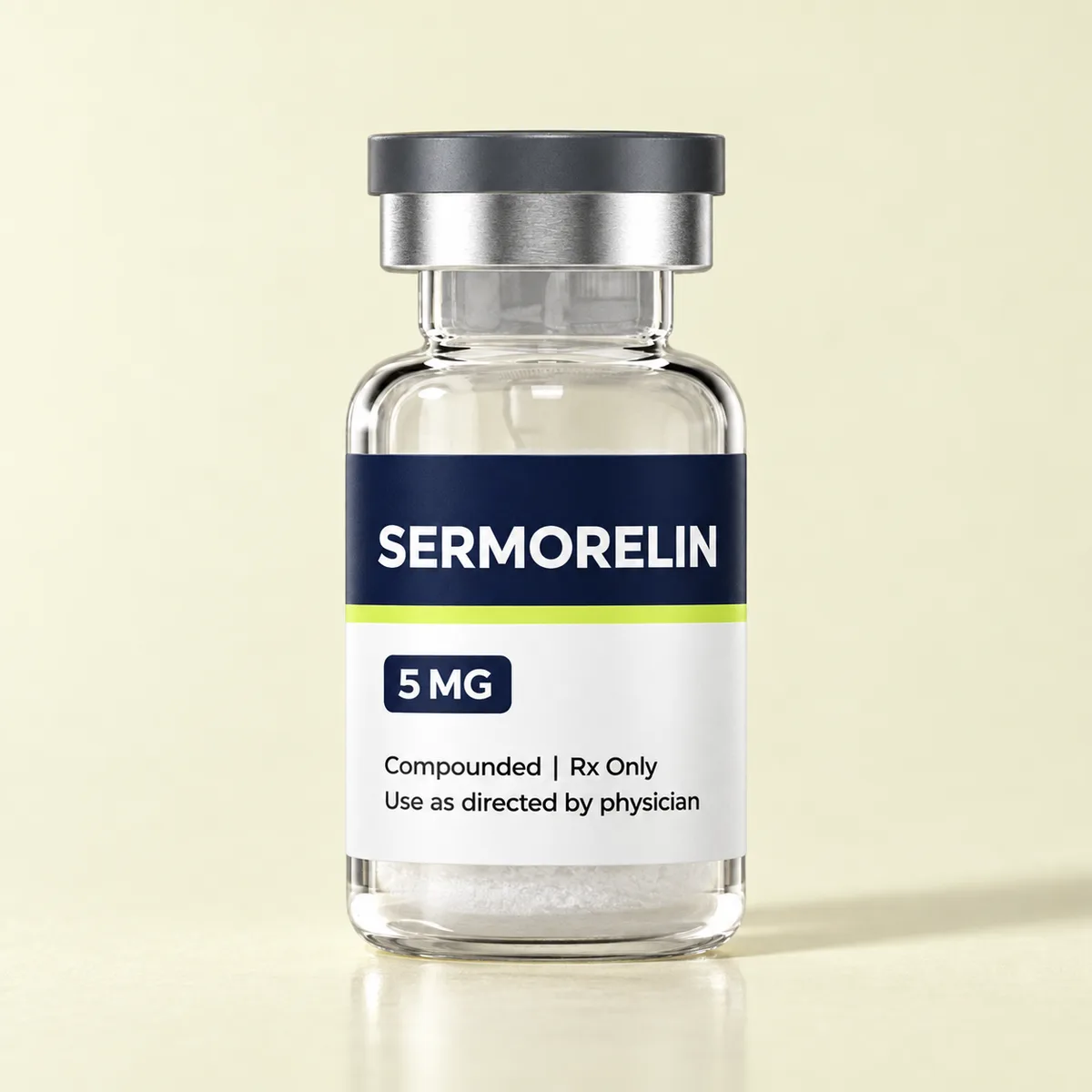
- GHRH analogs — copies of the natural hormone that tells the pituitary to release growth hormone. Sermorelin is the short-acting original. CJC-1295 is the long-acting version built to survive far longer in the bloodstream. Tesamorelin is the stabilized analog that went through real trials and won FDA approval for visceral fat reduction in HIV-associated lipodystrophy.
- Ghrelin mimetics — they act on a separate receptor, the one ghrelin uses, and amplify the pulse from the other direction. Ipamorelin is the selective, clean-profile member. Hexarelin is the older and stronger one, with more effect on cortisol and prolactin, which is why it fell out of favor.
- MK-677 is not a peptide. Ibutamoren is an orally active small molecule that hits the same ghrelin receptor. It raises growth hormone and IGF-1 convincingly and comes with appetite increase, water retention and reported effects on insulin sensitivity. It is not approved for any use, and it sits on the World Anti-Doping Agency list.
- The combination logic — pairing a GHRH analog with a ghrelin mimetic pushes both levers at once, which is why the CJC-1295 with ipamorelin stack became the default clinic protocol. The synergy is real in hormone measurements. Outcome data in healthy adults is another matter.
Side by side
| What it is | Evidence | Legal status | Typical monthly cost | |
|---|---|---|---|---|
| Sermorelin | Short-acting GHRH analog, daily at night | Old pediatric diagnostic and treatment history, thin modern adult outcome data | Not FDA approved, compounded on prescription | 50 to 150 dollars advertised |
| CJC-1295 with ipamorelin | Long-acting GHRH analog plus selective ghrelin mimetic | Raises growth hormone and IGF-1 reliably, no outcome trials in healthy adults | Neither approved, compounded on prescription | 150 to 350 dollars advertised |
| Tesamorelin | Stabilized GHRH analog, the only approved one | Phase 3 trials, roughly 15 percent visceral fat reduction in its approved population | FDA approved for HIV-associated lipodystrophy | Specialty pharmacy pricing, not tracked here |
| Real HGH | The hormone itself, injected directly | Decades of trials in deficiency, and the effect everything else is compared against | Approved, restricted by federal law to specific diagnoses | Specialty pharmacy pricing, not tracked here |
Why pulses matter
Your pituitary does not release growth hormone in a steady stream. It fires in bursts, mostly at night, and the size and spacing of those bursts is regulated by feedback from IGF-1 and by somatostatin, the brake. Injecting growth hormone overrides that system: the level goes where the syringe puts it, the body's own production is suppressed, and side effects such as fluid retention, joint pain, carpal tunnel symptoms and insulin resistance follow the excess.
A secretagogue works inside the system instead of over it. It asks for a bigger pulse, the brake still applies, and IGF-1 feedback still limits the ceiling. That is the honest philosophical case for this category and it is a real one — the pattern is more physiological and the side effect profile in practice is milder. It is also the reason the effect is smaller. You cannot have a gentler intervention and expect the results of a stronger one, and any clinic selling you both halves of that sentence is selling.
Who this suits
Tesamorelin for its approved indication is the clearest case in the category, and it is not a lifestyle prescription. Beyond that, the people who get something out of secretagogues tend to share a pattern: middle-aged, measurably low IGF-1 for their age, sleeping badly, already training and eating properly, and willing to treat this as a slow three to six month experiment monitored with bloodwork. Sleep quality and recovery are the changes users report most consistently, and they are also the hardest to separate from expectation without a control group.
What a physician contributes here is not the prescription. It is the workup first — IGF-1 measured, thyroid and metabolic panel checked, cancer history taken seriously, and an honest read on whether the symptom you are chasing has a better-documented cause.
Who wastes money
- Anyone expecting the HGH result. If the goal is what growth hormone does at supraphysiological doses, no secretagogue delivers it, and the ones that came closest are the ones with the worst side effect profiles.
- Anyone hoping to get taller. Once the growth plates in your bones close at the end of puberty, no hormone and no peptide adds height. More growth hormone in an adult thickens tissue, it does not lengthen bone.
- Anyone not sleeping. The biggest natural growth hormone pulse happens in deep sleep. Paying 250 dollars a month to amplify a pulse you are cutting short every night is the most common wasted spend in this category.
- Anyone buying vials online. Research use only labeling is a legal disclaimer, not a quality standard, and independent testing of gray-market peptide vials has repeatedly found wrong doses and contamination.
- Tested athletes. Growth hormone secretagogues are prohibited at all times under the World Anti-Doping Agency list. There is no dose or timing that makes this safe for a tested competitor.
Questions people ask
Do HGH peptides actually work?
Are HGH peptides legal?
What is the closest thing to real HGH?
Do HGH peptides make you taller?
Are peptides safer than HGH?
Sources: PubMed — growth hormone secretagogues · PubMed — tesamorelin and visceral fat · US Code — growth hormone distribution limits