Head to head
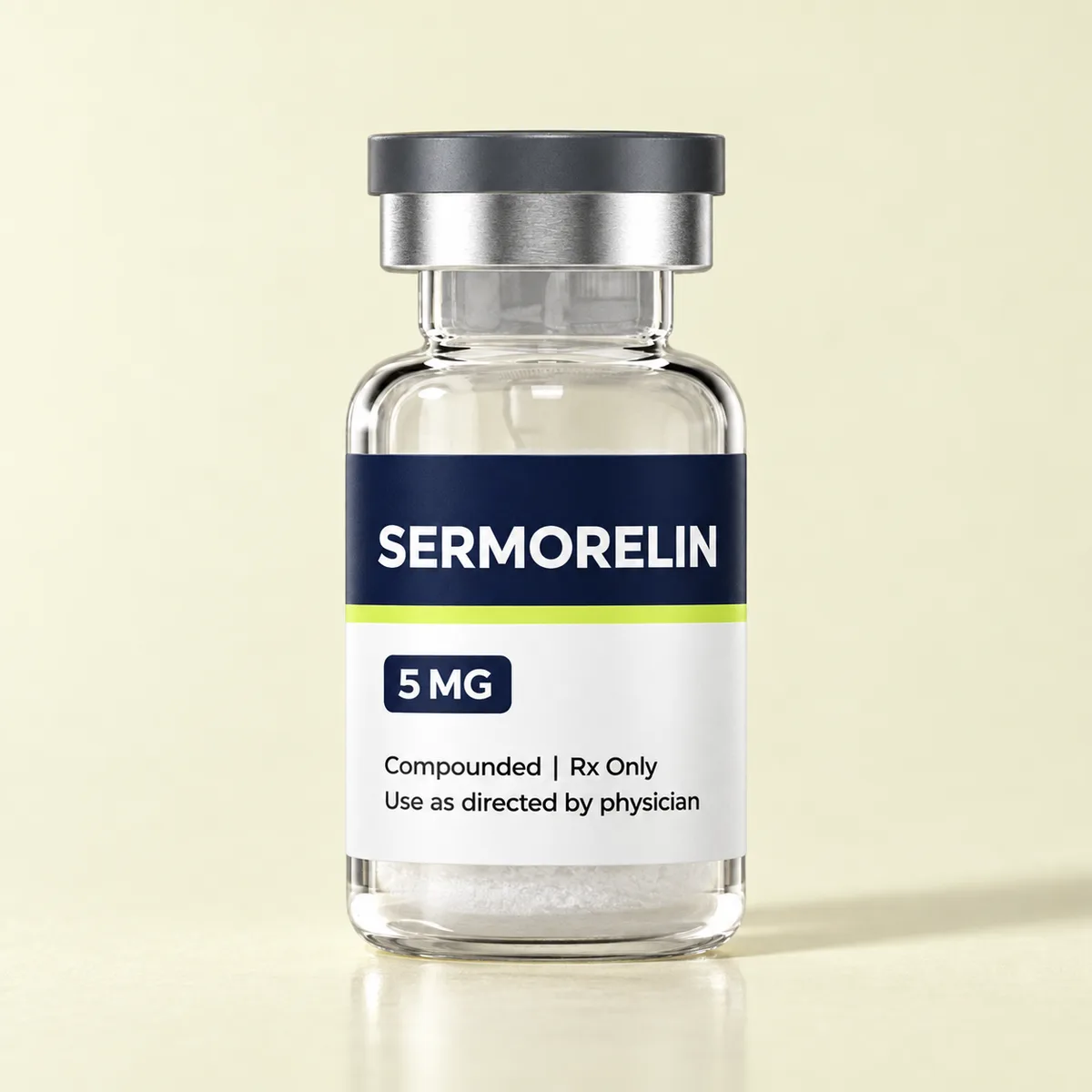
Sermorelin
vs ipamorelin.
Two ways to ask your own pituitary for more growth hormone, with very different paperwork behind them.
The short answer
Both compounds work by prompting your own gland rather than injecting growth hormone, and both are dosed at night for the same reason. The difference that matters is not the feeling people report, it is the record. Sermorelin was once an approved US medicine, its mechanism was solid enough to serve as a pituitary diagnostic test, and a licensed pharmacy may still compound it against a prescription. Ipamorelin has the cleaner pharmacology on paper, a selective pulse with little effect on cortisol and prolactin, and it never reached approval anywhere. The FDA then placed it in the compounding category reserved for substances that may present significant safety risks, which is why many clinics moved patients to sermorelin.
So the honest split is this. If the goal is a lawful, monitored route with the longest human track record, sermorelin is the one a physician can actually prescribe. If the goal is the most selective hormone pulse and you are reading about ipamorelin, understand that you are choosing pharmacology over legal standing.
| Sermorelin | Ipamorelin | |
|---|---|---|
| Mechanism | GHRH analog, acts on the pituitary GHRH receptor | Selective ghrelin-receptor secretagogue |
| Human evidence | Once an approved drug, thin modern adult outcome data | Early human trials for gut motility, no outcome data |
| What clinics use it for | Sleep, recovery and body composition in adults | Same goals, usually stacked with a GHRH analog |
| Typical protocol | 0.1 to 0.5 mg at bedtime, five nights on | 200 to 300 micrograms at bedtime on an empty stomach |
| Side effects | Injection site reaction, flushing, headache, fluid retention | Fluid retention, headache, lightheadedness, more appetite |
| Monthly cost range | 150 to 300 dollars advertised | 150 to 350 dollars advertised |
| FDA status | Prescription drug, compounded only | Not approved, compounding category 2 |
How each one works
Sermorelin is the first 29 amino acids of growth hormone releasing hormone, the active part of your own signal. It docks on the GHRH receptor and asks the pituitary to fire. Its half-life is roughly ten to fifteen minutes, so it produces a short burst and then disappears, which is exactly why it is dosed before sleep, when the body's largest natural pulse is already coming.
Ipamorelin arrives at a different door. It mimics ghrelin at the growth hormone secretagogue receptor, a second and independent trigger for the same release. The founding pharmacology work showed it does that selectively, with little of the cortisol, prolactin and ACTH rise that made older compounds in the class unattractive. That selectivity is real and it is the strongest fact in ipamorelin's favor. It also clears quickly, so the dosing pattern looks similar from the outside.
What the evidence says
- Sermorelin — the mechanism is not in dispute, and it was marketed in the US as Geref for pediatric growth hormone deficiency and as a diagnostic agent before being discontinued for commercial reasons. What is missing is a large modern randomized trial in healthy adults showing fat loss, muscle gain or better sleep.
- Ipamorelin — it was tested in people, but for slow gut function after abdominal surgery, not for aging, recovery or body composition. That program never produced an approved medicine.
- Neither — no controlled trial compares the two directly in healthy adults. Anyone who tells you one outperforms the other is describing a preference, not a result.
- What can be measured — IGF-1 before starting and again after several weeks. It is the only objective readout either compound offers outside a trial.
Can you take both
Stacking a GHRH analog with a ghrelin-receptor secretagogue is the standard clinic protocol, and the reasoning is sound in theory. Two different receptors, two different signals, a larger pulse than either produces alone, with the pituitary's own feedback loop still in charge. In practice the pairing you will see advertised most often is CJC-1295 with ipamorelin rather than sermorelin with ipamorelin, because the longer-acting GHRH analog covers more of the night.
The caution is straightforward. No trial has evaluated any of these combinations in healthy adults for either safety or benefit, and stacking two growth signals is precisely when fluid retention, tingling hands, joint aches and blood sugar drift start showing up. A combination belongs in a plan a physician is monitoring with labs, not in a self-designed protocol.
Cost and access
Advertised clinic pricing for a sermorelin program usually lands between 150 and 300 dollars per month, and ipamorelin programs between 150 and 350 dollars, with blended vials priced higher. Those are marketing numbers rather than a fee schedule, and they typically bundle the consultation and the pharmacy fill.
Access is where the two separate for good. Sermorelin is a prescription drug with no marketed brand, so a licensed US compounding pharmacy prepares it for a named patient on a physician's order. Ipamorelin has no lawful equivalent route since the compounding category 2 assignment, which is why product still circulating carries a research use only label. That label describes the seller's legal position and says nothing about identity, strength or sterility.
Which one the doctor picks
In practice the choice is made before either name comes up. A clinician looks for a reason behind the poor sleep, the stalled recovery or the low energy, tests IGF-1 rather than reading a symptom list, and rules out the conditions that would make stimulating a growth pathway a bad idea, cancer history first among them. If a growth hormone secretagogue still makes sense after that, sermorelin is usually the one written, because it can be filled lawfully and followed with bloodwork. If diagnosed deficiency turns up instead, approved growth hormone products exist and are prescribed under monitoring.
Questions people ask
Which is safer, ipamorelin or sermorelin?
What is the best thing to stack with sermorelin?
How quickly do you see results from ipamorelin?
What does sermorelin do to the body?
Sources: PubMed — sermorelin literature · PubMed — ipamorelin literature · FDA — bulk substances safety list · WADA prohibited list