Peptide guide
GHK-Cu.
Copper repair.
One peptide, two very different evidence bases — decades of skin research on the cream, and almost nothing on the syringe.
The short answer
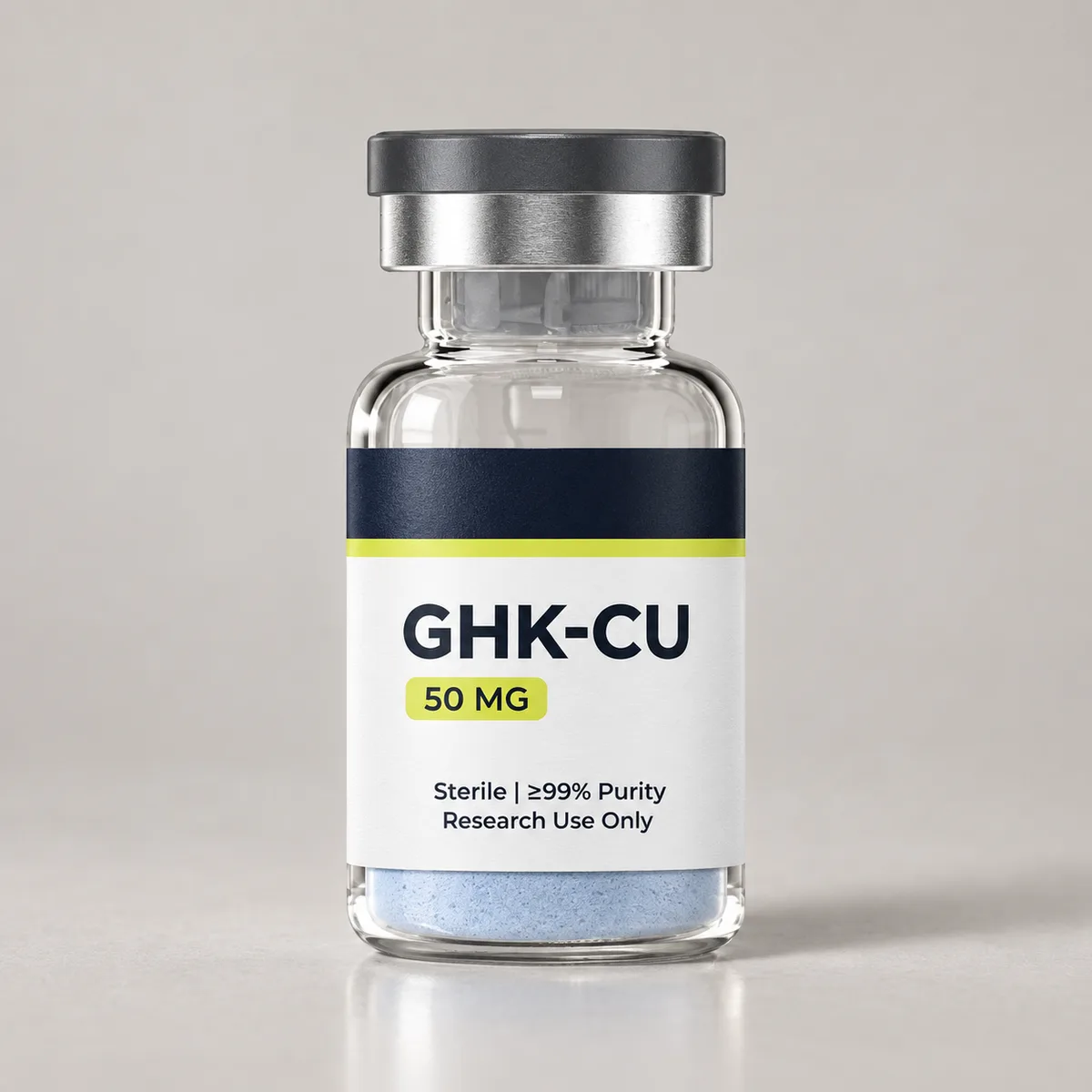
GHK-Cu is a naturally occurring copper-binding tripeptide that the body makes and that declines with age. Applied to skin, it has a respectable body of research behind claims about collagen, skin firmness and wound repair, which is why it sits in mainstream cosmetic products. Injected, it has almost no controlled human evidence at all, and the confident systemic claims made for it are borrowed from cell and animal work.
What the research shows
- It is a real human molecule. GHK circulates in plasma, binds copper with high affinity, and its concentration falls substantially between young adulthood and later life. That decline is the origin of the whole anti-aging argument for it.
- Topical skin data is the strongest part. Controlled studies of copper peptide creams have reported improvements in skin density, fine lines, roughness and firmness over weeks to months. Many of these studies are small or industry-linked, so read them as supportive rather than definitive.
- Wound and tissue repair work is largely preclinical. In animal and cell models, GHK-Cu stimulates collagen and glycosaminoglycan production, attracts repair cells and shows antioxidant and anti-inflammatory activity. This is where most of the mechanism talk comes from.
- Gene expression findings are intriguing and early. Laboratory work has shown GHK influencing large numbers of genes tied to tissue remodeling and repair. It is a striking result in cells, and it has not been translated into human outcomes.
- Hair claims are thinner. GHK-Cu has been studied for follicle stimulation mostly in preclinical models and small formulations work, not in the kind of trials that support minoxidil or finasteride.
- Injectable human evidence is essentially absent. There is no randomized human trial establishing what subcutaneous GHK-Cu does to skin, joints, hair or anything else.
Dosing in practice
A physician sets any injectable dose, and for GHK-Cu there is no approved regimen to anchor to. These are the patterns reported in clinic practice and vendor protocols, not recommendations.
- Reported subcutaneous doses sit in the range of roughly 1 to 2 mg per day, often in short courses of a few weeks
- Some protocols dose every other day or a few times per week instead of daily
- Topical products commonly use low single-digit percentage concentrations, applied once or twice daily
- Copper content is the reason people keep courses short, since this is not a peptide alone but a peptide plus a metal
Side effects and risks
- Topical — redness, stinging, dryness or contact dermatitis in sensitive skin, and irritation when layered with strong acids or high-strength vitamin C in the same routine
- Injected — injection site reactions, and a safety profile that is unknown rather than established, since controlled human data does not exist
- Copper load — repeated systemic dosing adds copper, which matters for anyone with Wilson disease or another copper handling disorder
- Product quality — injectable GHK-Cu comes from the research chemical market, with no verification of purity, sterility or copper ratio
- Not for everyone — pregnancy, breastfeeding and active cancer are standard reasons to leave any growth-signaling peptide alone
Legal and FDA status
As a cosmetic ingredient, GHK-Cu is legal and unremarkable — it appears in serums sold in ordinary stores, and cosmetic ingredients do not need FDA approval before marketing. As an injectable it is a different product entirely, with no FDA approval for any medical use and no place in the normal pharmacy supply. Vials sold under research use only labeling are unapproved drugs, and buying them means accepting whatever is in them.
How people get it legally
For skin, the legal route is simple and it is also the route with the evidence — a well-formulated topical product used consistently. For anything systemic, the honest path is a conversation with a clinician about what you are actually treating, since scarring, hair loss and skin aging all have options with stronger human data behind them. If injectable peptides remain part of the plan, that is where sourcing and monitoring get handled properly.
Questions people ask
What is GHK-Cu peptide used for?
What are the negative side effects of GHK-Cu?
Is GHK-Cu peptide legal?
How much GHK-Cu do people inject daily?
Is GHK-Cu the safest peptide?
Sources: PubMed — GHK-Cu literature · PubMed — copper tripeptide and skin · PubMed — GHK and wound healing · FDA — cosmetic ingredients