Buying guide
Semaglutide
online, legally.
Three routes are lawful and one of them shrank hard. Here is how to read any semaglutide website in two minutes.
The short answer
Semaglutide is a prescription medicine in every form it takes, brand pen or compounded vial. That one fact decides everything about buying it online. A legitimate service collects your medical history first, puts a physician licensed in your state in front of it, and names the US pharmacy that fills the order in writing. A service that takes your card before anyone medical looks at you is not a pharmacy, whatever the site looks like. The lawful routes below differ in price by roughly fivefold, and nearly all of that difference is the accountability standing between you and the vial.
Three legal routes
- Brand pens through insurance — the strongest route when it works. Wegovy for chronic weight management and Ozempic for type 2 diabetes are approved products with a known dose in a sealed pen. Coverage for diabetes is common. Coverage for weight management depends on the plan and usually needs prior authorization, so the first call is to the plan, not to a website. Cost with coverage is a copay rather than a monthly bill.
- Brand pens at self-pay prices — if the plan says no, the manufacturer savings and direct-to-patient programs are the next stop, and they have moved self-pay brand pricing down substantially from the sticker. This is still an approved product filled by a licensed pharmacy, which is the part that matters. You need a prescription either way, and telehealth can write it.
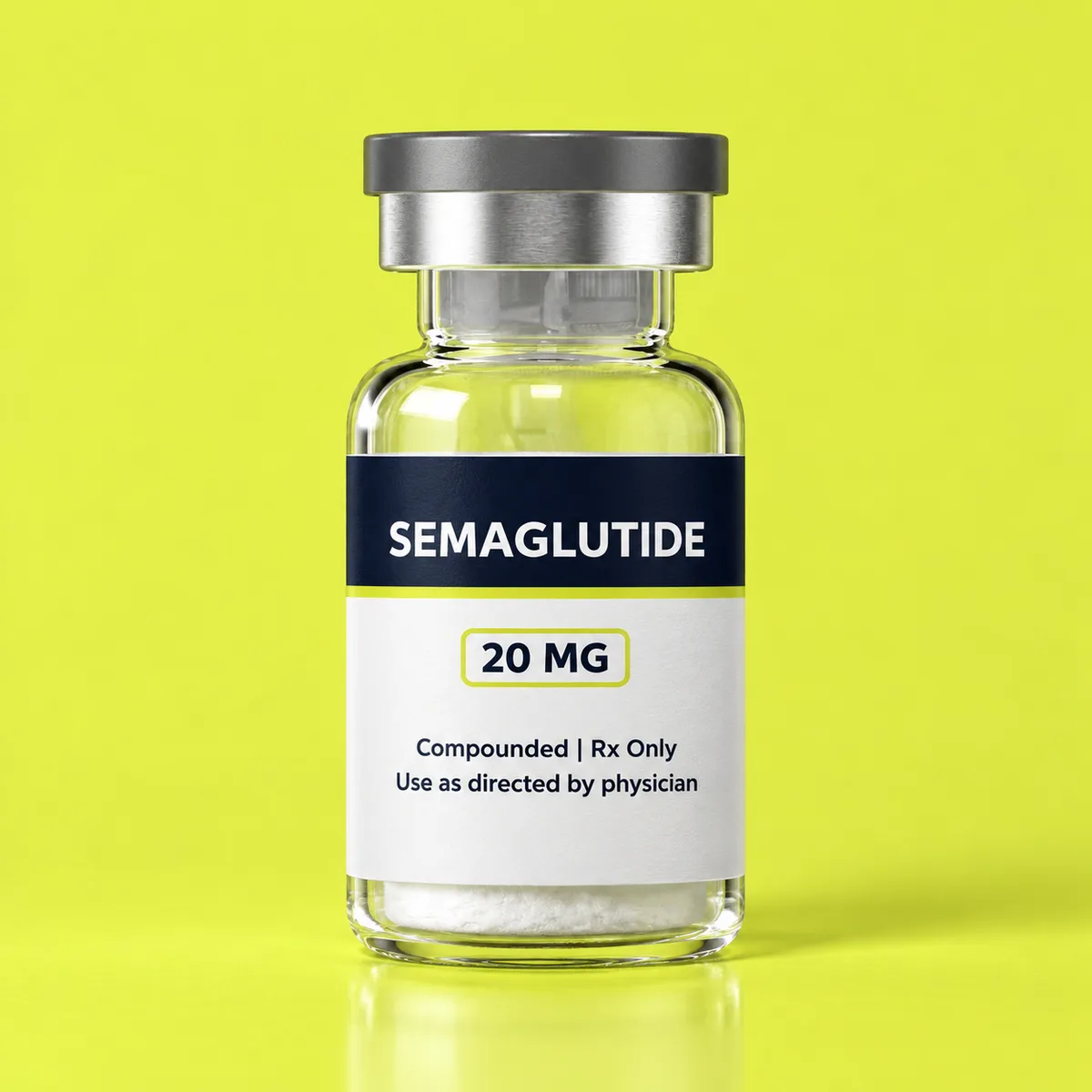
- Lawful compounded through licensed telehealth — narrower than it was and still real in defined, patient-specific circumstances. The test is not the price. It is whether a physician licensed in your state reviewed you before payment and whether the clinic will name the US 503A or 503B pharmacy that prepares your prescription. If either answer is vague, treat the offer as a gray sale with better web design.
What ended in 2026
For a couple of years, semaglutide sat on the FDA shortage list, and that listing was the legal footing for compounding pharmacies to produce it at scale. An enormous telehealth market grew on top of that allowance, which is why cheap semaglutide felt normal. The shortage resolved, brand supply recovered, the listing ended, and through 2025 and 2026 the FDA moved against mass production and mass marketing of non-approved GLP-1 products.
What survives is the narrow kind of compounding that always existed: a prescription written for a named patient with a documented clinical reason, filled by a licensed pharmacy. What disappeared is the catalog model, where a website offered semaglutide to anyone at a flat monthly price with a form that nobody read. Many of those sites are still online. The offer looks identical and the legal ground underneath it is not the same.
The 2-minute legitimacy test
Open the site and answer these. Every yes is one point of accountability, and a site that fails the first three is answering a different question than the one you asked.
- A medical intake appears before checkout, not after payment
- A physician licensed in your state is named, with a license you can verify
- The US pharmacy that fills the order is named in writing
- The word prescription appears plainly, not as a legal footnote
- Full monthly price is shown up front, shipping included
- Labs and consult fees are stated separately, not buried
- A real medical team answers messages about side effects
- Cancellation is available any time, with no locked term
- A US business address and a company name are published
The three channels
| What you compare | Brand pens | Lawful compounded | Gray sellers |
|---|---|---|---|
| Typical price | 1000 to 1350 dollars a month before savings programs | 200 to 400 dollars a month advertised | Far below every licensed price in the market |
| Doctor involved | Yes, prescription required | Yes, licensed in your state, before payment | No medical review at any point |
| Pharmacy named | Yes, a licensed dispensing pharmacy | Yes, a named US 503A or 503B pharmacy | No pharmacy exists in the transaction |
| Dose certainty | Fixed dose in a sealed pen | Vial with a lot number and an expiry date | Unknown strength, unknown contents |
| Main risk | Cost and coverage denials | Program legality varies, so verify the pharmacy | Unregulated injection, no recourse, no refund |
What month one looks like
The first month is mostly paperwork and a very small dose. Labeled weight management dosing starts at 0.25 mg once weekly for about four weeks before any increase, and that slow start exists to limit nausea. Rushing it is the most common self-inflicted problem in this entire category.
Expect a delivery window of several days with cold-chain packaging, written storage instructions, and a scheduled follow-up. Expect appetite changes within the first weeks and mild nausea around each step up. What you should not expect is a bigger dose on demand. A physician who raises the dose because you asked rather than because the plan calls for it is not monitoring you.
Red flags that matter
- No intake form before checkout, or an intake that cannot be failed
- Crypto or payment-app only, with no company name attached
- Ships from overseas, or the origin is never stated at all
- Research use only wording sitting beside human dosing advice
- Guaranteed approval, guaranteed prescription, guaranteed pounds lost
- A countdown timer or a twelve month package before any bloodwork
- Vials with no lot number, no expiry date, no storage instructions
- Reviews that exist only on pages the seller controls
- The pharmacy is described as trusted and partnered, but never named
What it costs
Brand pens without insurance are typically advertised at roughly 1000 to 1350 dollars a month, and manufacturer savings and direct self-pay programs frequently bring that down a long way, so the sticker is rarely the number a person pays. Where compounded programs remain lawful, telehealth clinics typically advertise 200 to 400 dollars a month. Labs, the first consult and shipping may sit outside that figure, which is the single most common surprise on the first invoice. Our price index tracks what US clinics advertise month by month, and the cost guide shows how to read a quote before you agree to it.
Questions people ask
Can I buy semaglutide online without a prescription?
Is compounded semaglutide still legal?
How much does semaglutide cost online?
How do online doctors decide the dose?
What happens at the first online visit?
Sources: FDA on compounded GLP-1 drugs · FDA — compounding questions and answers · PubMed — semaglutide literature