Peptide guide
Thymosin
alpha-1.
An approved medicine in dozens of countries and a research compound in this one. The strongest evidence on the site.
The short answer
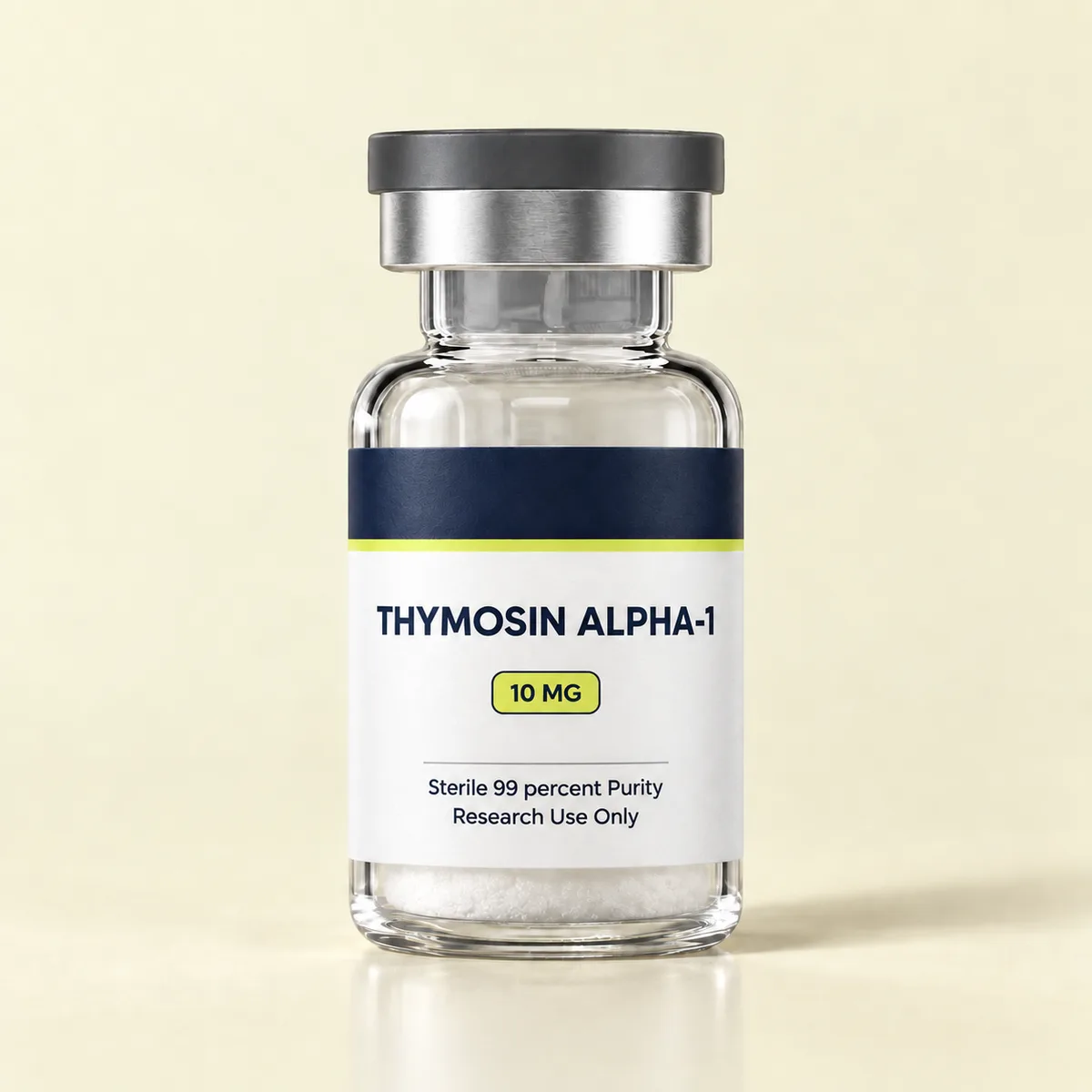
Thymosin alpha-1 is the outlier in this catalog. It is a short peptide the thymus makes naturally, it modulates immune signaling, and the synthetic version has been approved and sold as Zadaxin in more than thirty countries, mostly as an addition to antiviral treatment in chronic hepatitis B and C and as an immune support agent. It has been through randomized trials in sepsis and in severe COVID, with results that are genuinely mixed rather than absent. What it has never been is FDA approved in the United States, and the compounding route that once supplied it here has narrowed. So the evidence is the best of any research-tier peptide on this site, and the legal position at home is still difficult.
What the research shows
- What it is — a 28 amino acid peptide derived from a thymic protein and produced synthetically as thymalfasin. Its role in the body is regulatory: it influences how T cells mature and how the immune system responds, rather than attacking a pathogen itself.
- Hepatitis — the approvals abroad rest on its use alongside standard antiviral therapy in chronic hepatitis B and C. This is where the longest clinical record sits, and it is an adjunct role, not a standalone cure.
- Sepsis — randomized trials have tested it in severe sepsis on the theory that the immune paralysis phase of critical illness is exactly what an immune regulator should address. Results across those trials are inconsistent, and the question is still open.
- Severe COVID — the pandemic produced a wave of studies, several of them randomized and several observational. Some reported benefit in severely ill patients, others did not, and the literature as a whole has not settled into a clear answer.
- Vaccine response and immune suppression — it has been studied as a vaccine adjuvant and in patients with weakened immune function. These are real clinical questions with real published work, which separates this peptide from most of what is sold online.
Approved abroad, not here
Two things can be true at once, and here they are. A regulator in Italy or China approving a medicine is meaningful evidence that a serious review found the benefit-risk balance acceptable for a defined use. It is also not an FDA approval, and it does not mean a vial bought online in the United States is the same product that was reviewed. The approved medicine abroad is a manufactured drug with an identity, a purity specification and a label. A research use only vial is none of those things, whatever molecule the certificate claims.
The uses behind those approvals also matter more than the word approved. This is an adjunct in chronic viral hepatitis and an immune agent in defined clinical situations, prescribed to patients who have a diagnosis, under monitoring. Almost nothing in that description resembles a healthy adult buying it to strengthen an immune system that is working fine.
Dosing in practice
A physician decides whether anything belongs in your plan and at what dose. What follows describes what the approved product carries on its label abroad and what appears in reported practice, so the units make sense when you read them, not as a recommendation.
The approved hepatitis regimen is 1.6 milligrams given subcutaneously twice a week, continued for months as part of a wider treatment plan. Trials in critical illness have used their own schedules, often more frequent and short in duration, decided by protocol in a hospital. Gray-market vials arrive as freeze-dried powder that must be reconstituted with bacteriostatic water, and milligram dosing here means arithmetic errors are less forgiving than they look on a small syringe. Anyone whose immune system is actually compromised has no business setting this schedule from a forum post.
Side effects and risks
- The clinical record describes it as well tolerated. Injection site reactions, transient discomfort and mild flu-like symptoms are what appear most often in reports.
- Immune modulation is the point of the drug and therefore the risk of the drug. Anyone with an autoimmune condition, a transplant, or immune-suppressing medicine is in the situation where a regulator of immune signaling is least predictable.
- Use in a real illness without a real diagnosis is the practical danger. Chronic infection, unexplained fatigue and recurrent illness need a workup first, because treating the immune response while the cause goes unnamed wastes time you may not have.
- Pregnancy, breastfeeding and childhood are not covered by the evidence base.
- Product risk — independent testing of gray-market peptide vials has repeatedly found wrong doses, impurities and contamination. Injecting an unsterile product into someone with weakened immunity is the worst version of this hazard.
Legal and FDA status
Thymosin alpha-1 is not an approved drug in the United States. For years it was supplied here through compounding pharmacies, and that changed when the FDA's review of bulk drug substances nominated for compounding placed it among substances that may present significant safety risks, which effectively closed the pharmacy route. What remains is a gray zone: vials labeled for research use, offshore suppliers, and clinics working around the edges of a rule that was tightened deliberately. The approval abroad does not create a legal supply here, and the research use only label is a disclaimer rather than a quality standard.
How people get it legally
There is no straightforward lawful route to this peptide in the United States right now, and that is the honest summary. It is also the page where a doctor visit changes the most, because the people drawn to thymosin alpha-1 usually have a reason: chronic hepatitis, recurrent infection, treatment that suppresses immunity, or a cancer history. Every one of those belongs in front of a physician who can order the right tests, name what is happening, and reach for treatments that are approved here for that exact problem. If the conclusion is that an immune-modulating agent is appropriate, that decision is made with monitoring, not with a vial from a website. Full stop.
Questions people ask
What does thymosin alpha-1 do?
Is thymosin alpha-1 FDA approved?
Why was thymosin alpha-1 removed from compounding?
Does thymosin alpha-1 help the immune system?
Is thymosin alpha-1 the same as TB-500?
Sources: PubMed — thymosin alpha-1 literature · PubMed — thymalfasin in sepsis · ClinicalTrials.gov — trial search · FDA — bulk substances safety list